
ISO published ISO 9001:2026 on 16 September 2026 — the first full revision of the world's most widely used quality management standard in more than a decade. If your organization holds ISO 9001:2015 certification, nothing breaks overnight, but you now have a defined window to move your quality management system (QMS) to the new edition.
This guide explains what actually changed, what stayed the same, and how to plan a calm, low-cost transition.
The short version
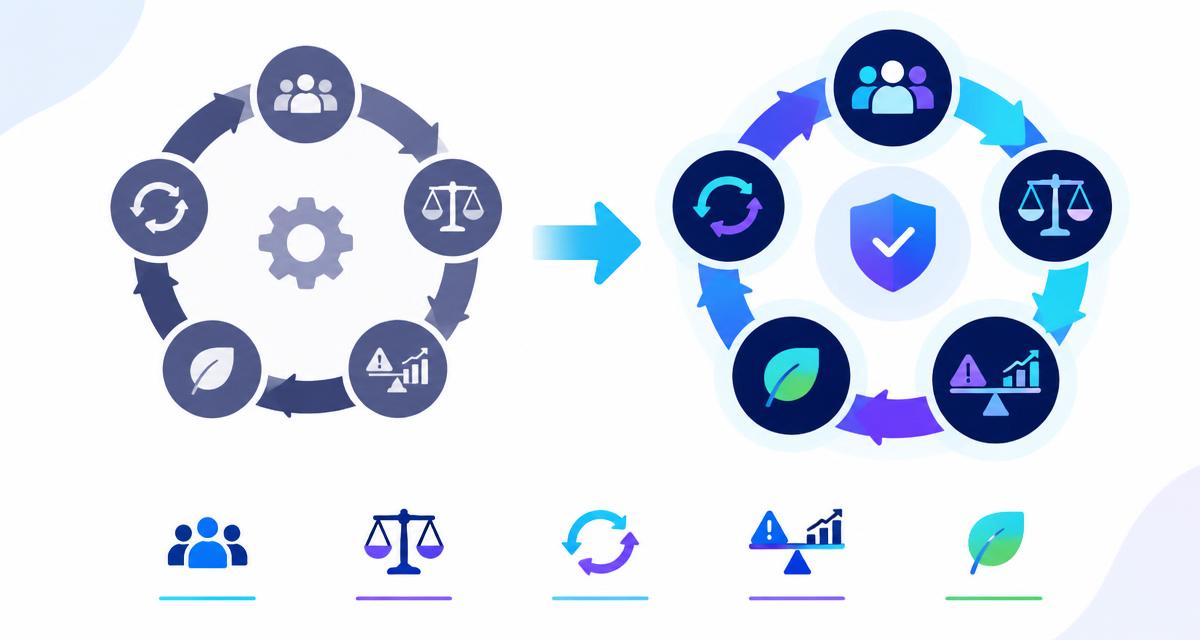
ISO 9001:2026 is an evolution, not a rewrite. The core principles, the process approach and the familiar Annex SL clause structure (Clauses 4–10) carry forward. Accreditation bodies describe the revision as "targeted updates rather than fundamental change" — mostly clarifications, restructured clauses and harmonised terminology.
The areas that changed most are:
- Interested parties
- Quality culture and ethical behaviour
- Risks and opportunities (now clearly separated)
- Planning of changes
- Management review
ISO 9001:2015 vs ISO 9001:2026 at a glance
| Area | ISO 9001:2015 (+ Amd 1:2024) | ISO 9001:2026 |
|---|---|---|
| Structure | Annex SL high-level structure | Updated harmonized structure shared with other ISO management system standards |
| Risks and opportunities | Treated together as "risk-based thinking" | Separated, so opportunities are pursued as actively as risks are controlled |
| Quality culture and ethics | Implicit in leadership | Explicit emphasis on quality culture, values and ethical behaviour |
| Change management | Planning of changes (6.3) | Greater attention to planning and controlling change deliberately |
| Climate change | Added by the 2024 amendment | Carried into the main text |
| Terms and definitions | Relied heavily on ISO 9000 | QMS-specific terms added directly to the standard |
| Annex A | Short clarification of structure and terminology | Expanded clause-by-clause guidance explaining the intent of requirements |
What changed, clause by clause (the parts auditors will look at)
Clause 4 — Context and interested parties
Expect auditors to probe more deeply into how you identify the needs and expectations of interested parties and which of them become QMS requirements. Climate change as a relevant issue is now part of the main text rather than an amendment.
Action: revisit your context analysis and interested-parties register and make sure each relevant requirement maps to a process or objective.
Clause 5 — Leadership, quality culture and ethics
The 2026 edition makes leadership responsible for fostering a quality culture and promoting ethical behaviour. Quality is framed as a reflection of the organization's values and behaviours, not only its procedures.
Action: be ready to show evidence — leadership communications, values statements, how ethical concerns are raised and handled, and how culture is assessed.
Clause 6 — Risks, opportunities and planning of changes
Risks and opportunities are now addressed separately. Planning of changes gets more attention, so changes to processes, suppliers, systems or the organization itself should be planned, assessed and controlled rather than handled reactively.
Action: split your risk register so opportunities have their own owners and actions, and formalize a lightweight change-control process.
Clause 9 — Management review
Management review inputs and outputs have been refined. Auditors will want to see that reviews actually drive decisions on resources, improvement and change.
Action: update your management review agenda and minutes template to cover the revised inputs.
Annex A — Guidance on intent
The informative Annex A is significantly expanded, explaining the intent behind requirements. It is not auditable, but it is the best tool you have for interpreting the new text — especially for smaller organizations and first-time implementers.
Transition timeline
Certification bodies and accreditation bodies have announced a transition period of roughly three years, ending around September 2029. Under the IAF / Global ACI approach, certification bodies first transition their own accreditation; after that, your certification body will schedule your transition audit.
Confirm the exact dates and the point at which new certifications must be issued to the 2026 edition with your certification body — these details are set by them and the accreditation body.
A practical 6-step transition plan
- Buy and read the standard — get ISO 9001:2026 from ISO or your national standards body.
- Run a gap analysis — compare your current QMS clause by clause against the 2026 requirements, focusing on the five change areas above.
- Update documented information — context analysis, interested parties, risk and opportunity registers, change-control procedure, quality policy and management review templates.
- Train leadership and internal auditors — the culture and ethics requirements depend on leadership, not the quality team.
- Run an internal audit and a management review against the new edition before the external audit.
- Book your transition audit — many organizations combine it with a scheduled surveillance or recertification audit to avoid extra cost.
Common mistakes to avoid
- Rewriting the whole QMS. The structure carries forward; targeted updates are enough.
- Treating "quality culture" as a poster. Auditors will look for behaviour and evidence, not slogans.
- Leaving it to the last year. Certification body auditor capacity tightens near the deadline.
How ICyberWave can help
ICyberWave provides consulting, implementation, and audit support for ISO management systems, including ISO 9001 gap analyses, documentation updates, internal audits and transition-audit readiness. If you also run ISO 27001 or ISO 27701, we can align the transition so your integrated management system is updated once. Learn more about our ISO 9001 support or book a consultation.